
How to Search Travis County Warrants
The official tool is the Travis County Sheriff's warrant search. It loads an embedded application that lets you search current warrants by name. The Sheriff's page states plainly that no warranty is made as to the accuracy or completeness of the data, that users should verify before relying on it, and that the office does not endorse linked websites. Treat a result as a lead, not a final answer.
The Sheriff warrant search is the page to use, not a third-party warrant site.
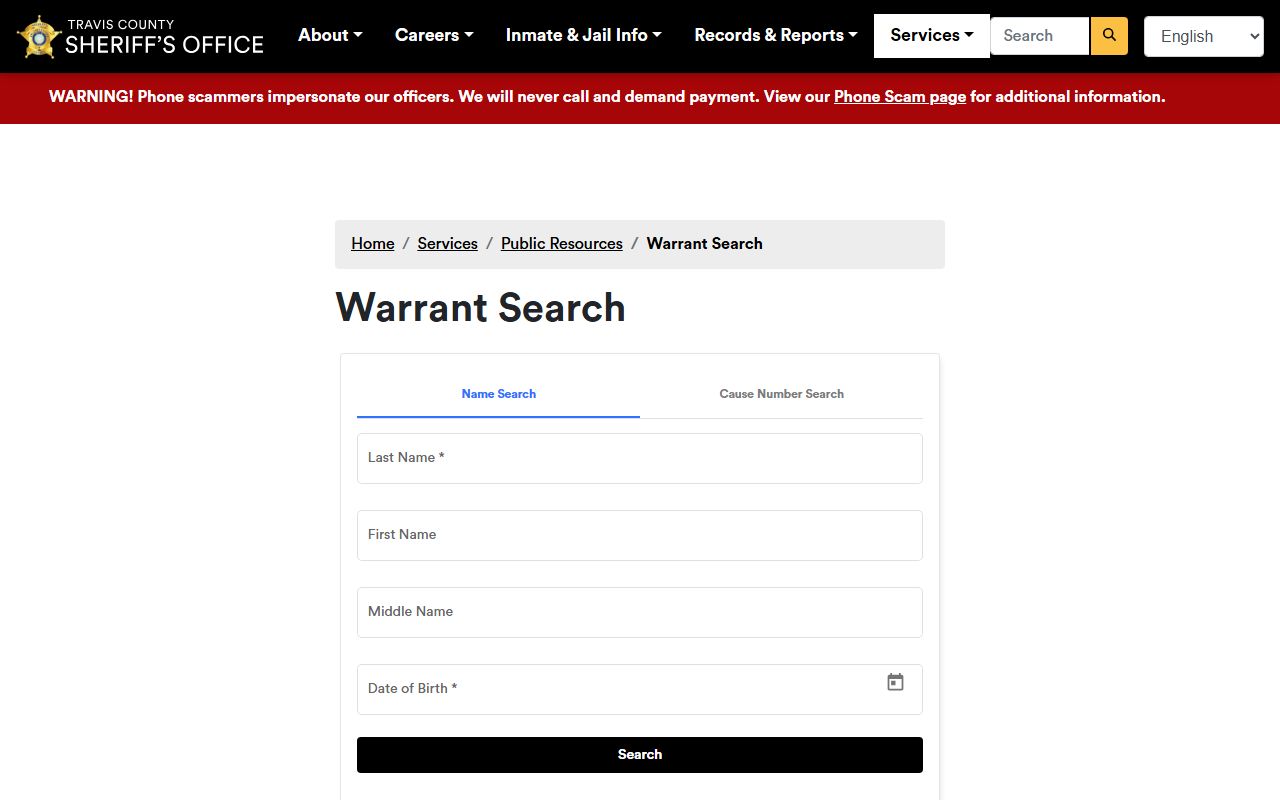
That page hosts the warrant tool and the accuracy disclaimer. An older address still loads the same application for people who saved the legacy link.
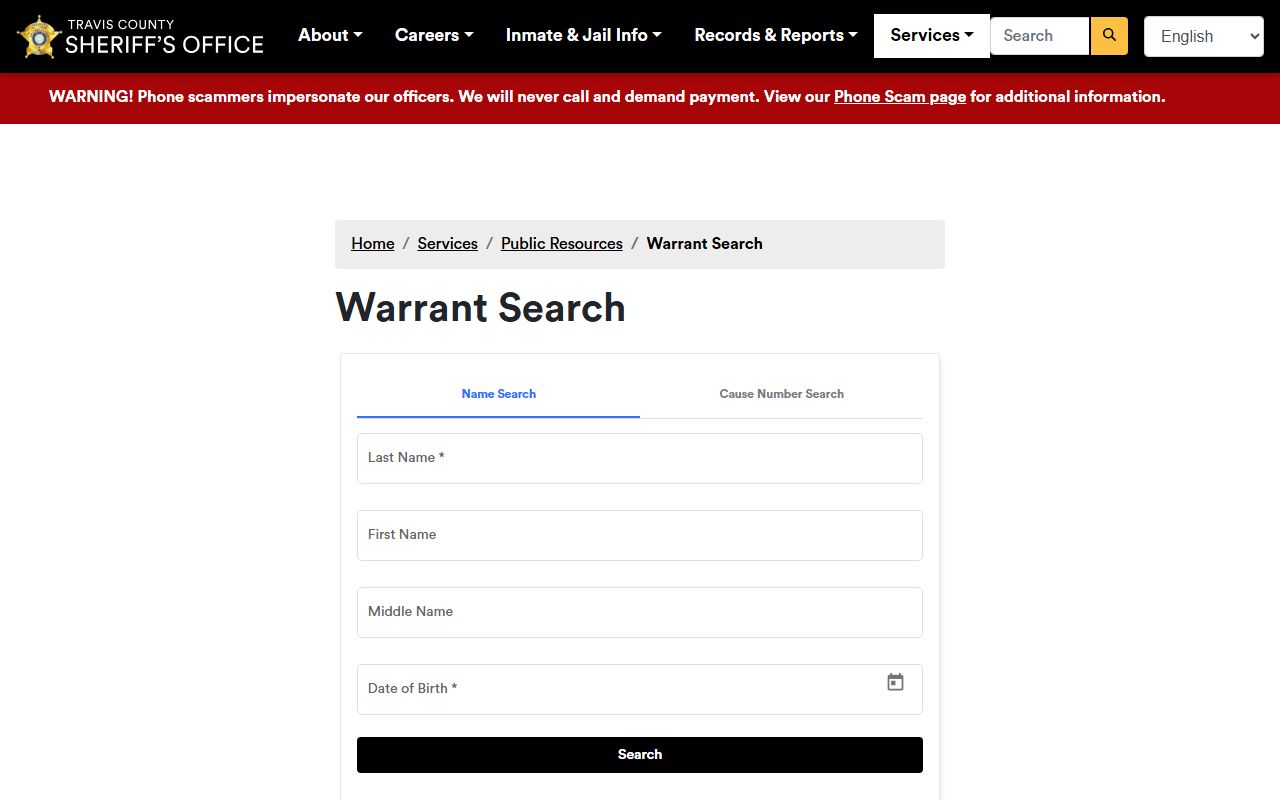
The legacy warrant search URL redirects to the current Sheriff tool, so either route reaches the same data.
Avoid private warrant websites. Many of them copy old county data, charge a fee, or push services you do not need. The official Sheriff tool is free, and it is the only county source that reflects current warrant data. The Sheriff also warns the public about phone scams, where a caller claims to be an officer and demands payment to clear a warrant. No legitimate office collects a warrant payment by phone or gift card. If you get such a call, hang up and contact the court directly. The same caution appears on the Public Defender's pages, which note that an appointed attorney will never ask a family for money.
Travis County Warrant Search Fields
The warrant tool keeps its inputs simple. A last name runs a search, and a first name or date of birth narrows it. Because the application runs as embedded software, exact field validation is not published, but the standard inputs are listed below. The tool reads from the county's warrant data service behind the scenes.
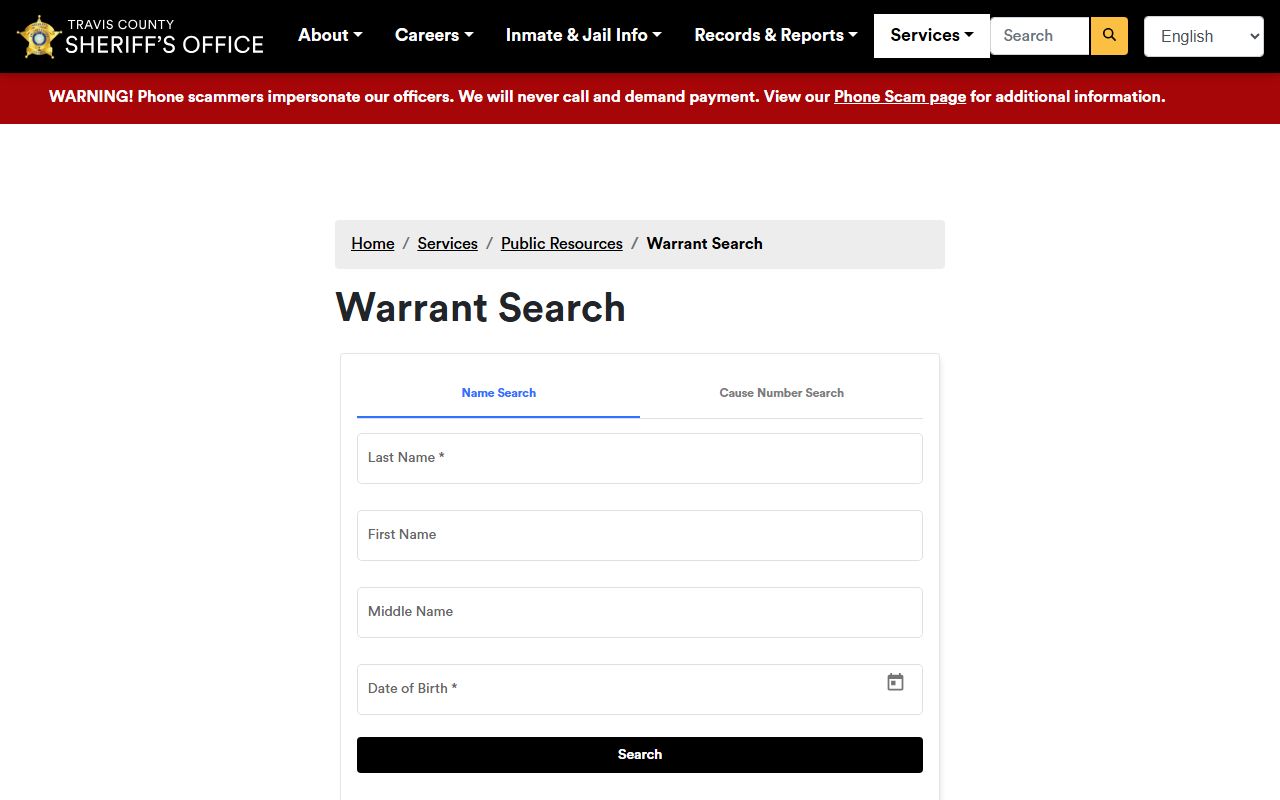
That service feeds the public tool. The search fields you will use are below.
| Field Label | Type | Required | Notes |
|---|---|---|---|
| Last Name | Text | Yes | Main search input for a name lookup |
| First Name | Text | No | Narrows a common last name |
| Date of Birth | Date | No | Helps tell apart people with the same name |
| Search | Button | No | Runs the warrant query |
Use the date of birth when a name is common. A match still needs to be confirmed with the issuing court.
Types of Warrants in Travis County
A warrant is not one thing. Different courts issue different kinds for different reasons. The District Clerk Criminal Division maintains felony search warrants and issues arrest warrants, commitments, and subpoenas in criminal cases. The County Clerk Misdemeanor Division supports warrants for the criminal county courts at law. Justice courts can issue warrants in fine-only and traffic cases. A warrant can also stem from a probation violation, a bond forfeiture, or a child-support enforcement order, so a single name can carry more than one warrant from more than one court.
- Arrest warrant - Orders the arrest of a named person on a charge.
- Bench warrant - Issued by a judge, often after a missed court date.
- Capias - A writ for arrest after failure to appear or after judgment.
- Capias pro fine - Tied to unpaid fines and costs in a fine-only case.
- Search warrant - Authorizes a search; felony search warrants sit with the District Clerk.
- Probation violation warrant - Issued when a person breaks supervision terms.
What a Travis County Warrant Listing Shows
A warrant listing gives enough to identify the person and the issuing court, but not the full case file. The fields below are the ones a public listing typically includes. Always read the disclaimer that accuracy must be verified before you act on a result.
- Person name
- Date of birth or age, if displayed
- Warrant number or cause number
- Offense or charge
- Court that issued the warrant
- Bond amount or no-bond status
- Warrant type, such as capias, arrest, or bench warrant
Important: A warrant search result is not a verified legal record. Confirm any warrant with the issuing court or an attorney before you act on it.
How to Verify a Travis County Warrant
Verification protects you from acting on a stale or wrong record. The county data can lag, and names can match by accident. Start with the official Sheriff tool, then confirm with the court named in the listing. Do not rely on a private warrant website, which may sell data or show old information.
If the listing names a criminal district or county court, call Criminal Court Administration at 512-854-9244. If it is a traffic or fine-only matter, the issuing justice or municipal court is the right contact. For the underlying charge, see Travis County arrest records.
Verification also matters for false matches. Two people can share a name and a rough age, and a public tool may surface the wrong record. Use a date of birth to narrow the search, then compare the offense, the court, and the warrant number against what you know. If something does not line up, the issuing court can confirm whether the warrant truly belongs to your subject. Acting on an unverified hit can send the wrong person to a courthouse or, worse, lead to a wrongful surrender on a warrant that is not theirs.
How to Resolve an Outstanding Warrant
An open warrant does not go away on its own. The safe path is to confirm it, find the issuing court, and ask how to clear it. The steps below follow the county's guidance.
- Verify the warrant through the official Sheriff search or by calling the court. Do not use third-party sites.
- Identify the issuing court: district, county court at law, justice, municipal, or out of county.
- Contact the court clerk or an attorney. For criminal courts, call 512-854-9244.
- Ask whether the warrant clears through a court appearance, bond, payment plan, paperwork, or surrender.
- If bond is set, confirm accepted payment methods and hours before you go.
- After it is resolved, confirm clearance with the court and allow time for databases to update.
Traffic and Justice Court Warrants
Many warrants in Travis County come from traffic and fine-only cases, not felonies. The Sheriff says Justices of the Peace preside over traffic court, and the back of a ticket should show which court to contact. A missed traffic date or unpaid fine can lead to a capias pro fine. City of Austin tickets may belong to Austin Municipal Court instead of a county justice court.
If your warrant ties to a citation, the Travis County traffic court records page explains how to pay or contest the ticket and clear the matter.
Bond and Court Contact After You Find a Warrant
A warrant listing often shows a bond amount, and that figure shapes your next move. A bond is money or a promise that secures release and a return to court. Some warrants are set with a fixed bond, while others are marked no bond and require a hearing. If a bond is listed, confirm the amount, the accepted payment methods, and the hours before you go to the jail or court, since rules differ by case type and can change. A bondsman or surety can post a bond for a fee, but the underlying court still controls the case.
Knowing which court issued the warrant tells you who to call. For warrants from the criminal district courts or the criminal county courts at law, Criminal Court Administration is reached at 512-854-9244. For a traffic or fine-only warrant, the justice or municipal court named on the ticket is the contact. For general jail questions about someone already in custody on a warrant, the jail information line is 512-854-4180. If the warrant followed a missed court date, ask the court whether it can reset the case; if it followed nonpayment of a fine, ask about an ability-to-pay alternative rather than simply paying at the window.
Sealed Warrants and Restrictions
Not every warrant is public. Some search warrants and warrants in sealed or active investigations may not appear in the public tool. Law-enforcement work product can be withheld under Government Code 552.108. Grand jury matters are traditionally secret.
If you cannot find a warrant you expect to exist, that does not prove it is gone. It may be sealed, restricted, or simply not yet posted. For the broader access rules, see public records.
The reverse is also true. A warrant you cleared last week may still show online because the data takes time to update across systems. After you resolve a warrant, ask the court to confirm clearance and allow processing time before you assume the public tool is current. Keep any paperwork the court gives you, since a stale online record is easier to dispute when you can show the case was handled. When the data and your records disagree, the court that issued the warrant is the authority, not the website.