
How to Find Recently Released Travis County Inmates
Start with the county jail roster. If a person no longer appears in the Travis County Sheriff inmate search, that is a sign of a possible release, but not proof. People leave the county jail for many reasons, including bond, personal or pretrial release, a dismissed case, a completed sentence, a court order, or a transfer to another system. Central Booking processed about 30,000 people in 2023, so the roster turns over constantly.
The safe approach is to confirm rather than assume. Check the roster, then verify by phone, then widen the search to state and federal tools if needed. Property return runs through the jail's Inmate Property and Records section, tied to the person's facility and booking number. For the live county roster and how to read a profile, use the Travis County inmate records page.
Why Someone Leaves the Travis County Jail
People exit the county jail through several doors, and the reason shapes where to look next. The most common is bond, where a person posts money or a bondsman secures release pending the case. Others are released on a personal bond or pretrial supervision, which lets them go without cash but with conditions. A case can also be dismissed, or a judge can order release. When a county sentence is finished, the person is released outright. Each of these means the person is genuinely out, not hidden in another system.
Other exits are transfers, and those are easy to mistake for freedom. A person sentenced to state prison moves to the Texas Department of Criminal Justice. A federal defendant moves into the Bureau of Prisons. Someone wanted elsewhere can be sent to another county or to federal immigration custody. A medical need can move a person to a hospital. In each of these, the name leaves the county roster, but the person is still held. That is why an empty search result is a starting point, not an answer.
Setting Up Release Notifications
The easiest way to learn about a release is to be told, not to check a roster every day. VINELink is the national custody-notification platform, and it lets you register for an alert when a person's custody status changes. You select Texas and the agency context, find the person, then choose how you want to be notified, such as by phone, email, text, or app. It is free, and it is especially useful for victims and family members who need to know about a release in advance.
The VINELink system is a notification tool, not the official court record, and it depends on the agencies that feed it. It works best as an early warning, paired with a periodic check of the official roster.
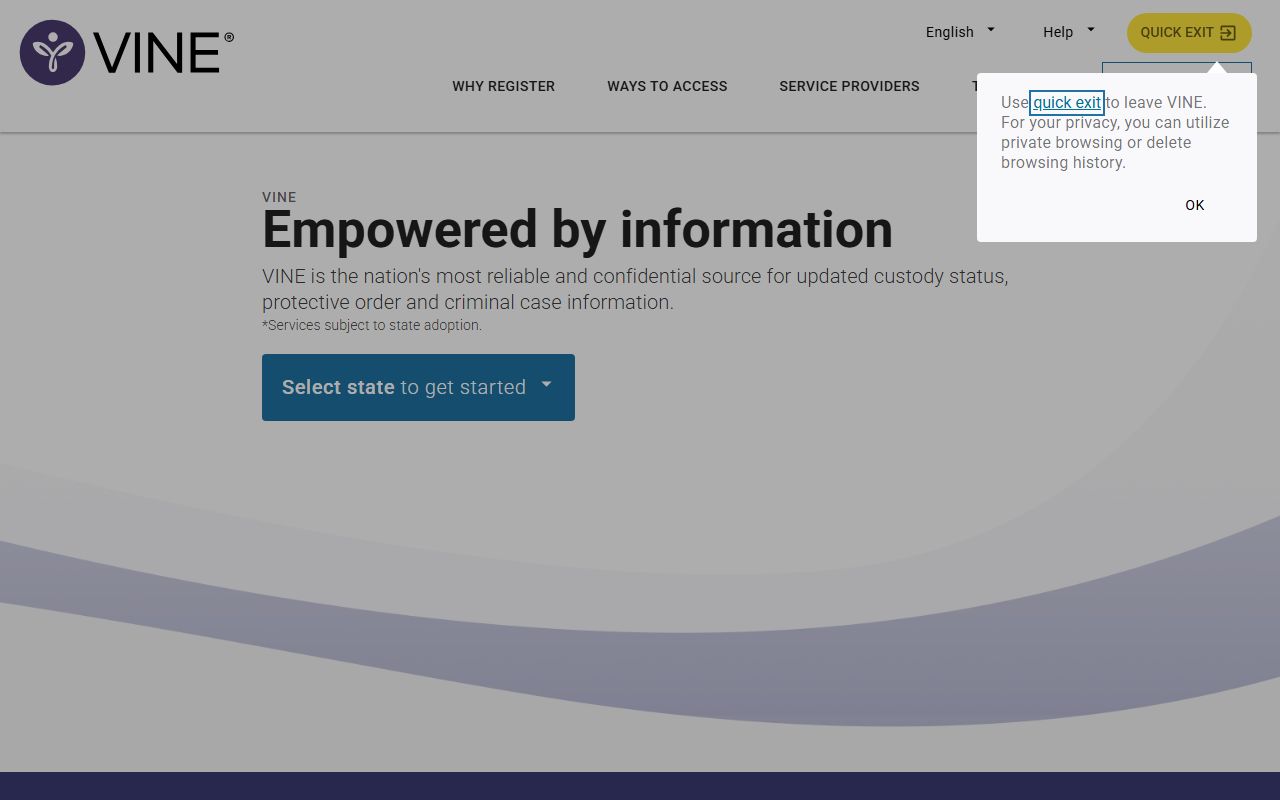
Register quietly and the alert arrives when the status changes. The main inputs are below.
| Field Label | Type | Required | Notes |
|---|---|---|---|
| State / Location | Dropdown | Yes | Select Texas or the relevant location |
| Name / ID | Text | Yes | Search for the person to follow |
| Agency / Facility | Dropdown | No | Narrows to a participating agency |
| Register for Notification | Workflow | No | Choose phone, email, text, or app alerts |
Searching State and Federal Released Inmates
If a Travis County defendant was sentenced to state prison, the record moves to the Texas Department of Criminal Justice. The TDCJ offender information hub covers people in state custody and shows projected release dates, which can shift with sentence credits. A person who just left the county jail on a state sentence may take time to appear as the transfer is processed. The TDCJ offender information hub is the state starting point.
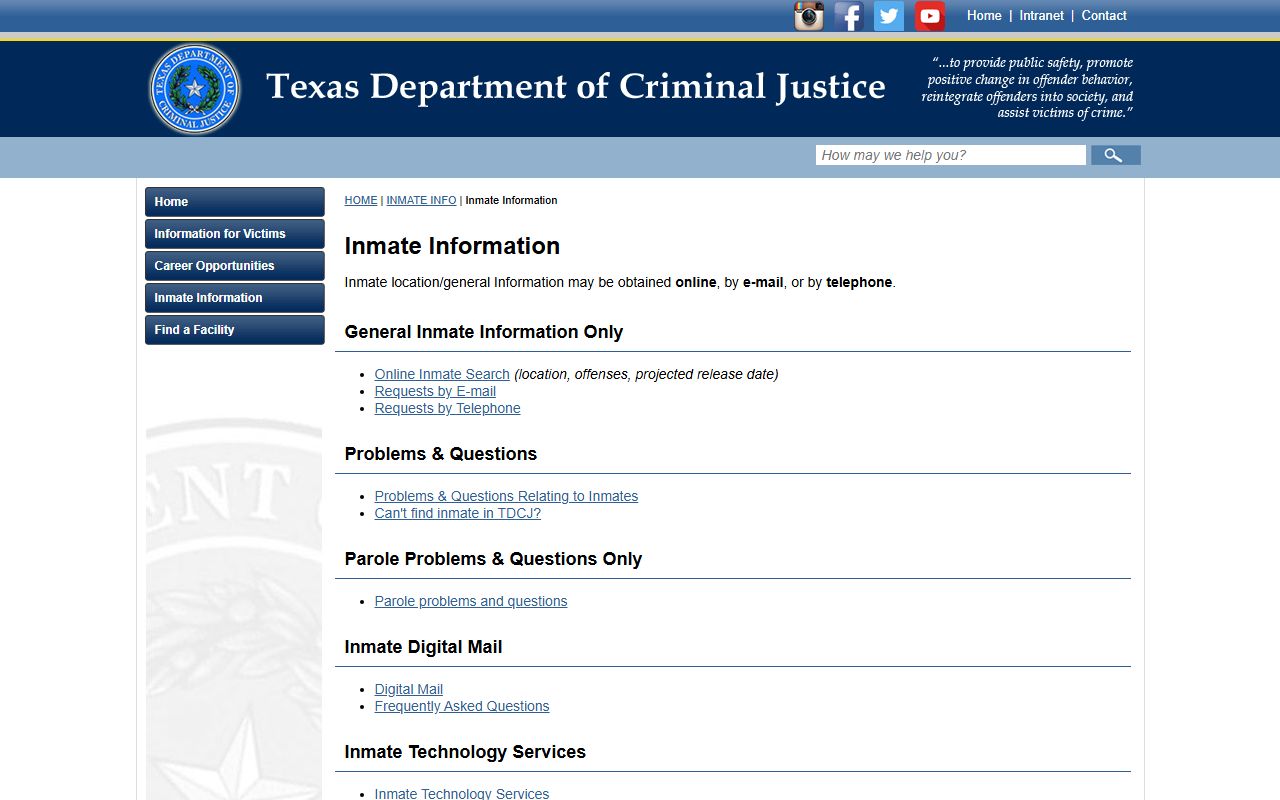
The state search accepts a name or a state number. Its main fields are below.
| Field Label | Type | Required | Notes |
|---|---|---|---|
| Last Name | Text | No | Use with a first name for a name search |
| First Name | Text | No | Narrows a common last name |
| TDCJ Number | Text | No | Direct search by TDCJ number |
| SID Number | Text | No | State identification number |
For federal custody, the Bureau of Prisons inmate locator covers people held from 1982 to the present. The BOP inmate locator searches by name or by a register number.
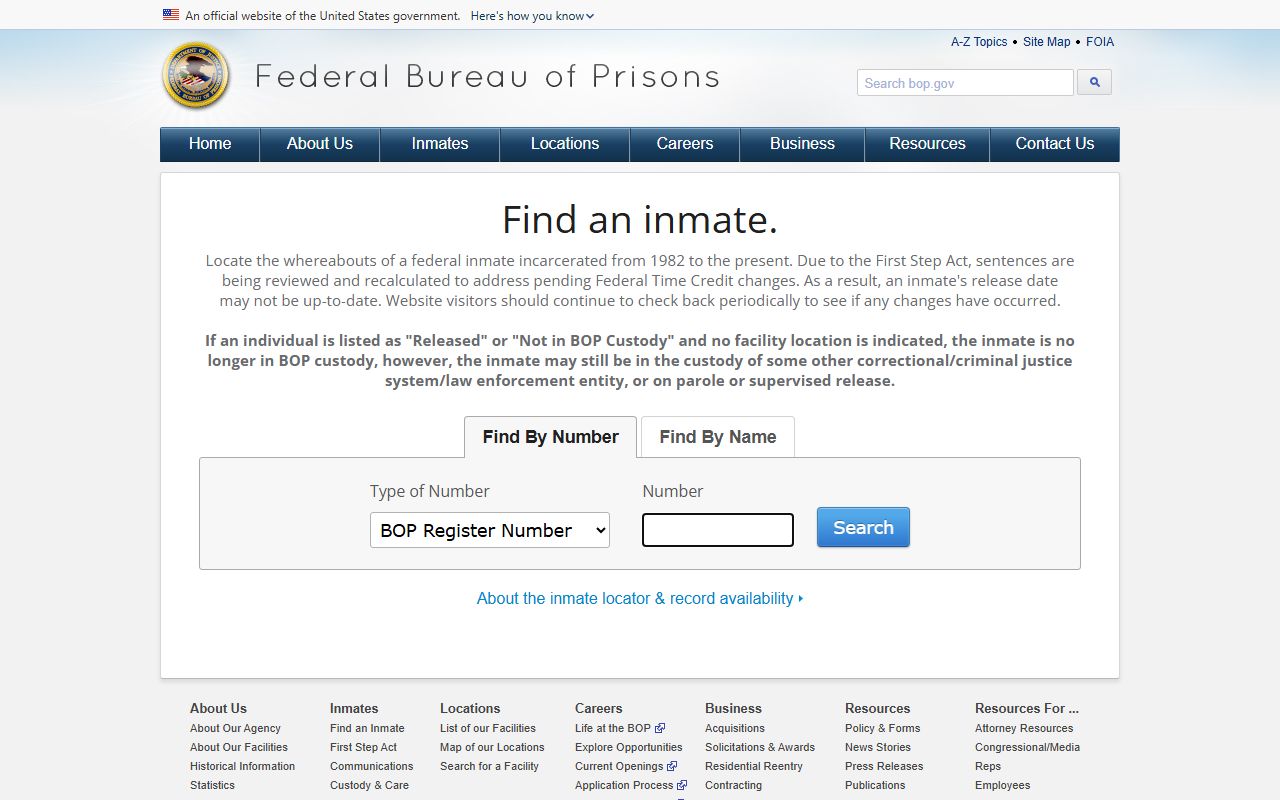
The locator warns that release dates can change under First Step Act recalculation. Its main fields are below.
| Field Label | Type | Required | Notes |
|---|---|---|---|
| Number / Type | Text + Dropdown | Number search | BOP register number in #####-### format |
| First Name | Text | Name search | Required for a name search |
| Last Name | Text | Name search | Required for a name search |
| Race / Age / Sex | Dropdown | No | Optional filters to narrow results |
A BOP result shows the name, register number, age, race, sex, release date, and location.
Verifying a Release in Person or by Phone
Online tools lag, so a phone call is often the fastest way to confirm a real release. Call jail information at 512-854-4180 to confirm whether someone is still in county custody. Do not rely on an empty roster result, because the person may have been transferred to TDCJ, the Bureau of Prisons, another county, federal immigration custody, a hospital, or a non-public status. Each of those moves can make a name vanish from the county search without meaning the person is free.
When you call, have the full name, date of birth, and booking number ready. The booking number ties the question to the right person and speeds up the answer. If the jail confirms a transfer, ask which system received the person so you know which database to search next. A release can also happen at odd hours, so the status you see online in the morning may not match what the jail can tell you by phone in the afternoon. For the steps to read a county profile before you call, see inmate records.
The Texas Sex Offender Registry
For some offenses, release adds a person to the Texas Public Sex Offender Registry, run by the Department of Public Safety under Code of Criminal Procedure Chapter 62. The registry supports search by name and by location, including a map and radius search around an address. DPS says most registry information is public, while it keeps certain fields private.
| Field Label | Type | Required | Notes |
|---|---|---|---|
| Name | Text | No | Search by registered offender name |
| City / ZIP / County | Text | No | Location-based search |
| Map / Radius | Map | No | Geographic search around an address |
Non-public fields include Social Security number, driver's license number, phone numbers, online identifiers, and victim-identifying information. The registry is for public safety, and misuse of the data is its own offense. For the registry alongside other state tools, see criminal databases.
Parole and Probation Information
A release from custody is not always the end of supervision. A person may leave prison on parole or finish a jail term but remain on community supervision, often called probation. Parole is handled at the state level for people who served time in TDCJ, while probation for a Travis County case is supervised locally through the courts and community supervision department. Supervision can carry conditions such as reporting, treatment, and travel limits, and a violation can lead back to custody on a warrant.
If you need to confirm a person's supervision status, the court of record and the supervising agency are the right contacts. For warrants that follow a supervision violation, the warrant records page explains how to search and verify.
Reentry Resources in Travis County
Travis County puts real weight on reentry. The Sheriff's Corrections Bureau describes programs that connect people to community agencies and clinical support for trauma, addiction, and thinking errors, along with marketable-skills and weekend-alternative programs. The Public Defender's Office, including its Mental Health Division, links justice-involved people to services, and the county's many specialty courts aim to break the cycle that brings people back to jail.
Civil legal help is available too. The Travis County Law Library and Self-Help Center, Texas Law Help, Texas RioGrande Legal Aid, Volunteer Legal Services of Central Texas, and the Austin Bar Association referral service all help with housing, family, and record-clearing issues that come up after release. For criminal record sealing or expunction, the arrest records page covers the process.
Reentry works best when it starts early. Property and paperwork are returned at release through the jail's records section, and keeping that paperwork helps with later steps like proving a case was resolved. The first days out often involve sorting housing, identification, benefits, and any court or supervision dates that remain. A missed supervision appointment can undo progress fast, so a released person should confirm every reporting date and condition before assuming the case is closed. The county's diversion focus aims to keep people from cycling back into the jail, and the legal-aid groups above can help untangle the civil problems that often follow a criminal case.
Civil Rights Restoration After Release
People often ask about voting after a conviction. In Texas, a felony conviction suspends voting while a person is finally convicted and serving the sentence, including incarceration, parole, or supervision. Voting eligibility returns after the sentence is fully completed. The rules are specific, and the information here is general, not legal advice.
For exact eligibility and the steps to re-register, the Texas Secretary of State and Texas Law Help are the right official sources. An attorney or a legal-aid clinic can confirm how the rules apply to a particular case, especially where supervision or unpaid obligations are involved. Other civil rights and restrictions can also follow a conviction, so it is worth getting a clear answer rather than guessing about what a record allows.