
How to Find Travis County Arrest Records
Recent arrests show up first in the jail. The Travis County Sheriff runs Central Booking, which processed about 30,000 people in 2023 for more than 30 law-enforcement agencies. A new booking appears in the inmate search once intake is done. To find a recent arrest, search the jail roster by name, then open the profile for the booking date and charges.
The arrest record and the court case are not the same file. The arrest and booking sit with the Sheriff. The charge, plea, and outcome sit with the clerk. Start with the jail, then move to the court portal.
- Search the Sheriff inmate roster by last name to find a current booking.
- Open the profile for the booking number, date, and charges.
- Move to the Odyssey court portal to follow the charge into court.
- Pick the District Clerk for a felony or the County Clerk for a misdemeanor.
- Request a certified record from the correct clerk if you need an official copy.
For full booking and jail detail, see the Travis County inmate records page. For the court file, use court records.
Booking and the Arrest Process in Travis County
Understanding how a booking is created helps you read the record. After an arrest, the arresting agency transports the person to Central Booking at the downtown jail. Intake staff verify identity, check for warrants, log property, and take a booking photo and fingerprints. A medical and mental-health screening follows, then classification decides custody level and housing. The Travis County Sheriff's Corrections Bureau runs this process for more than 30 law-enforcement agencies, which is why a name from an Austin police arrest, a sheriff arrest, or a smaller agency can all surface in the same county jail roster.
A magistrate sets bond and conditions at a first appearance, following state and local rules. Once that happens, the public inmate search updates with the booking number, the facility, the charges, and bond information. The arrest record reflects the charges at intake, which can change as the case moves to court. Because the data is entered fast and under pressure, the Sheriff cautions that it should be verified before anyone relies on it. For housing, bond, and visitation detail, the inmate records page goes deeper.
Arrest Record vs Criminal Court Record
People often want one thing and search for another. An arrest record documents the booking event. A criminal court record documents what the court did with the charge. They live in different systems and can tell different stories. A person can be arrested and never charged, or charged and never convicted.
| Point | Arrest Record | Criminal Court Record |
|---|---|---|
| Who keeps it | Travis County Sheriff | District Clerk or County Clerk |
| What it shows | Booking, charges at intake, bond, housing | Filings, pleas, orders, disposition |
| Where to search | Sheriff inmate roster | Odyssey court portal |
| Best for | Finding a recent arrest | Finding the case outcome |
For the full case history behind an arrest, use the Travis County court records page.
Charges vs Convictions
A charge is an accusation. A conviction is a finding or plea of guilt. The difference matters because an arrest blotter or a booking sheet lists charges at intake, and those charges can be dropped, reduced, or dismissed later. Reading only the arrest can give a false picture.
| Term | What It Means |
|---|---|
| Charge | The offense alleged at arrest or filing |
| Plea | The defendant's formal response to the charge |
| Conviction | A finding or plea of guilt entered by the court |
| Dismissed | The charge was dropped; with prejudice means it cannot be refiled |
| Deferred adjudication | The court held off on a finding; a dismissal may follow if terms are met |
Always confirm the disposition in the court record before treating a charge as an outcome.
Felony and Misdemeanor Records in Travis County
The class of the charge decides which clerk keeps the criminal record. Felonies are District Clerk records. The District Clerk Criminal Division maintains adult felony files, felony search warrants, felony nondisclosures, and all expunctions. Class A and B misdemeanors are County Clerk records, supported by the Misdemeanor Division for the criminal county courts at law.
Travis County has seven criminal county courts at law, numbers 3 through 9, which hear misdemeanors such as DWI, theft, and assault. County Court at Law 4 also hears protective-order and family-violence matters. For felony records in person, go to the Gault Annex at 501 W. 11th Street, Room 2.300. For the office detail, see the District Clerk and County Clerk pages.
The Travis County District Attorney's Role
After an arrest, the District Attorney decides whether to prosecute a felony and which court hears it. The DA's office reports one Magistrate Court and nine felony courtrooms. Victims and witnesses can reach Victim Services at 512-854-9449 to find case information. The DA case-information page explains how to track a felony case.
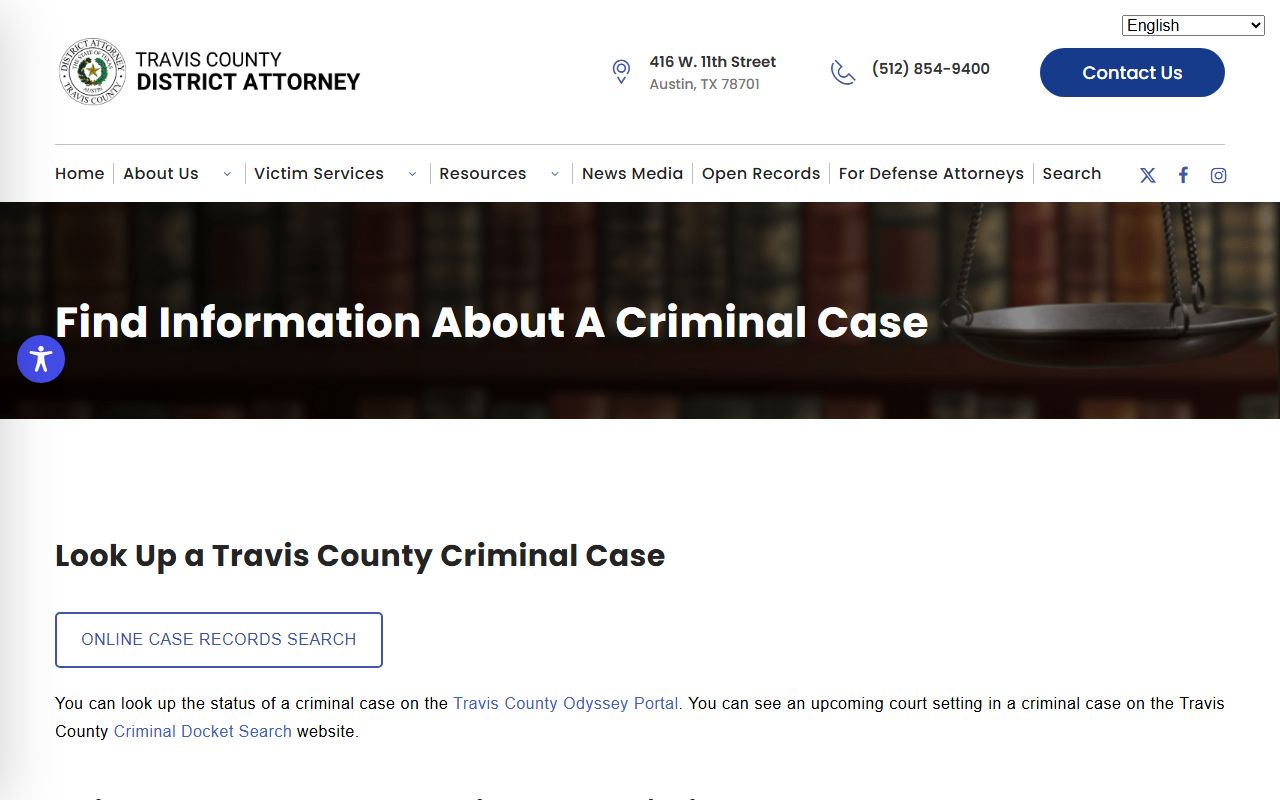
That page lists the felony courtrooms and the victim-services route. The current District Attorney is José Garza, who expanded the Victim Services Division and runs a Conviction Integrity Unit.
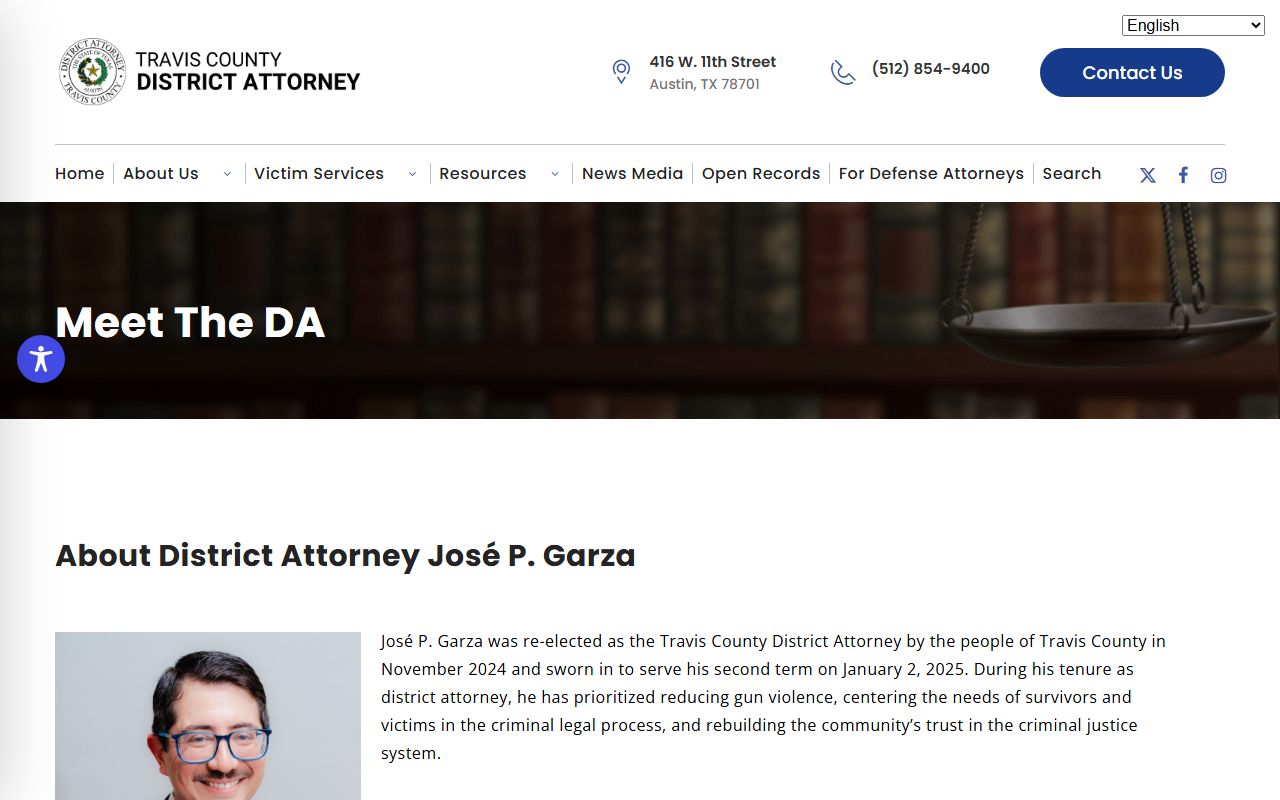
The DA shapes the charge, but the clerk keeps the official record, so a certified copy still comes from the District Clerk or County Clerk.
Specialty Courts and Diversion
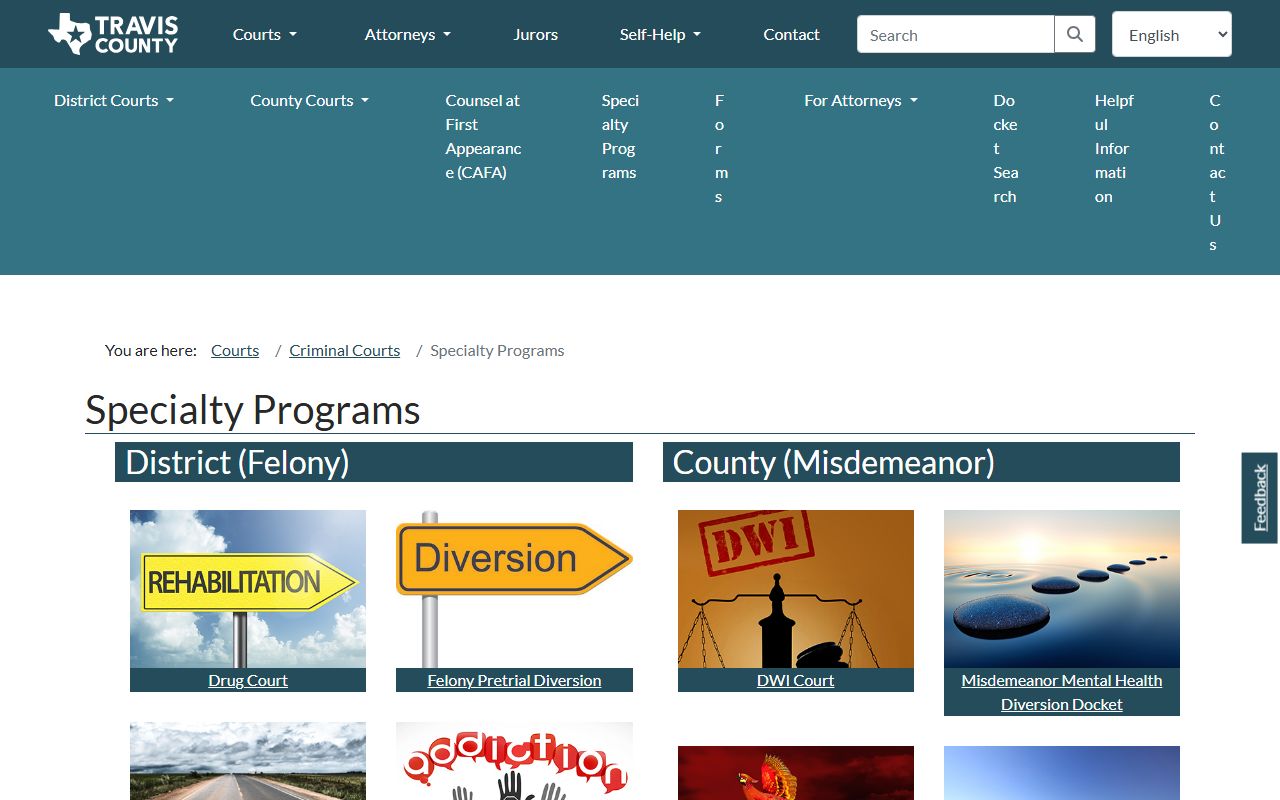
Not every arrest ends in a standard prosecution. Travis County runs many specialty courts that divert eligible defendants into treatment and supervision. The county's criminal specialty programs page lists felony Drug Court, Felony Pretrial Diversion, reentry courts, a DWI Court, mental-health dockets, and the Veterans Treatment Court. The criminal specialty programs page is the master list.
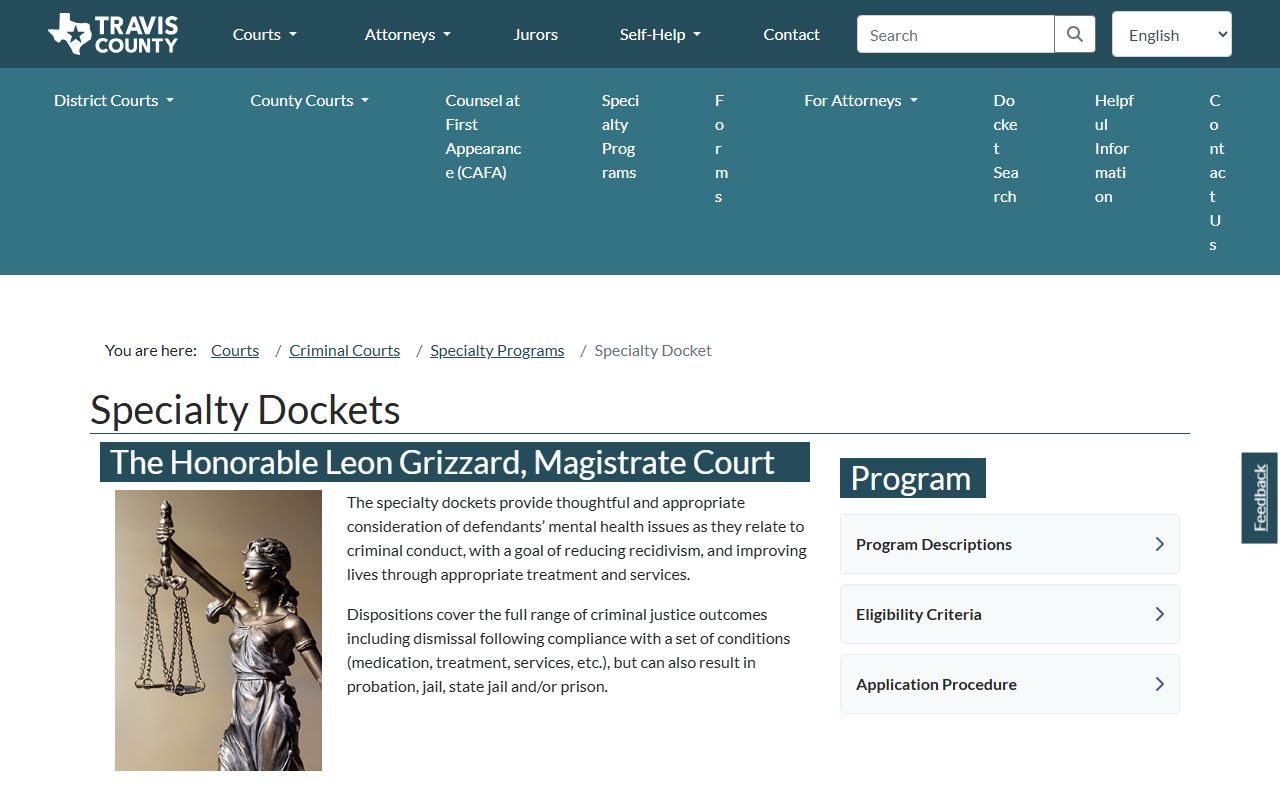
Mental-health diversion and the specialty docket, supervised by the Honorable Leon Grizzard in the Magistrate Court, run 3 to 12 months with treatment and regular court dates. Many cases end in dismissal after the person completes the program.
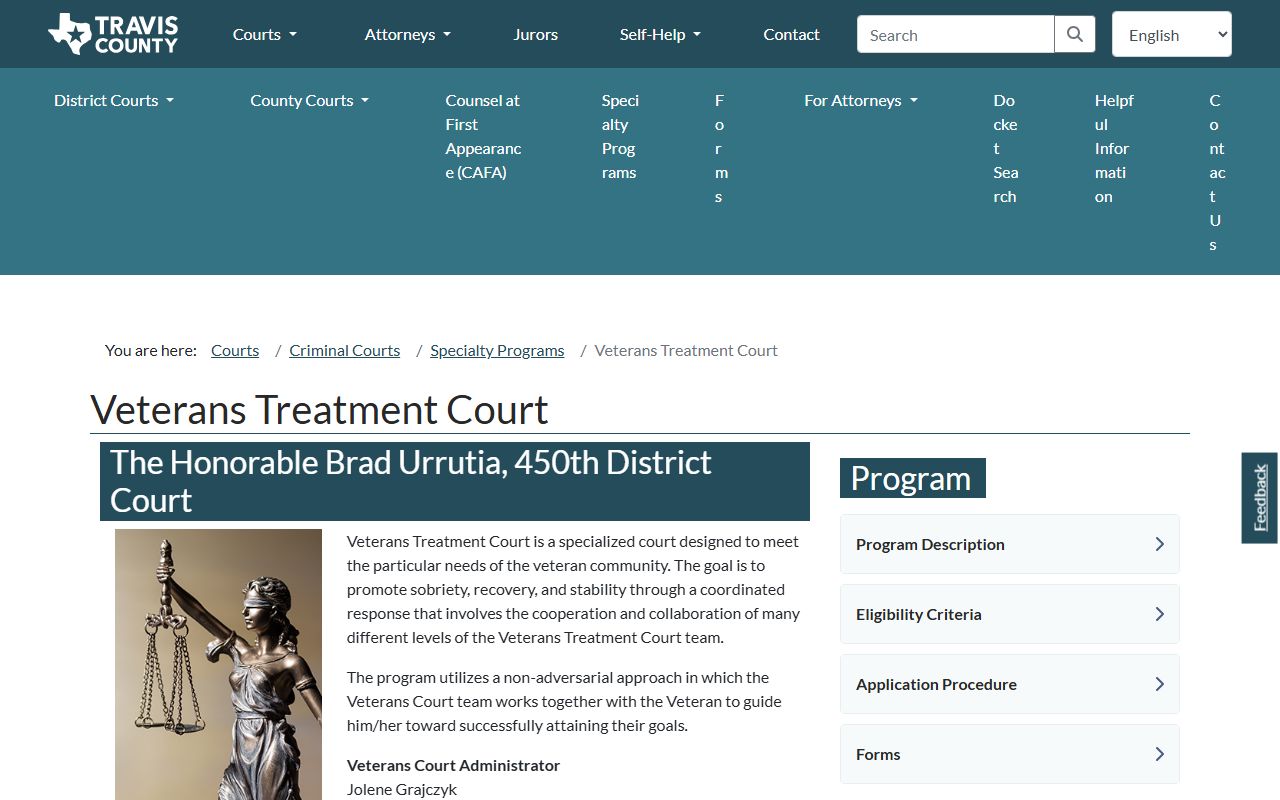
The Veterans Treatment Court, led by the Honorable Brad Urrutia in the 450th District Court, diverts eligible veterans into a 12 to 24 month program.
A diversion outcome still leaves a record unless it is later sealed or expunged.
What Arrest Records Are Public or Restricted
Most adult arrest and criminal court records are public, but several categories are not. Juvenile records are confidential under Texas Family Code Chapter 58 and do not appear in public searches the way adult cases do. Sealed cases need a judge's order. Active-investigation and law-enforcement work product can be withheld under Government Code 552.108.
Mugshots taken at booking may appear in the inmate profile while a person is in custody, but the Sheriff warns the data is for convenience and should be verified before reliance. Booking photos are not proof of guilt, and the underlying charge may resolve in the person's favor. For the broader access framework, see public records.
Sealed vs Expunged Records
Texas offers two ways to limit access to a criminal record, and they are not the same. Expunction destroys or removes qualifying records. Nondisclosure, often called sealing, hides records from the public but keeps them open to criminal-justice agencies. The District Clerk Criminal Division handles all expunctions, both misdemeanor and felony.
| Point | Expunction | Nondisclosure (Sealing) |
|---|---|---|
| What happens | Records are destroyed or removed | Records are hidden from public view |
| Who can still see it | Generally no one after a final order | Criminal-justice and authorized agencies |
| Governing law | Code of Criminal Procedure Chapter 55A | Government Code Chapter 411 |
| Travis County fee | $350 petition | $350 petition |
The expunction statute, Chapter 55A, was reorganized effective January 1, 2025. Nondisclosure rules sit in Government Code Chapter 411.
Statewide Criminal Records and Background Checks
A county search shows Travis County cases only. A full background picture often needs the state. The Texas Department of Public Safety keeps statewide criminal-history record information under Government Code Chapter 411. DPS also runs the public sex-offender registry and the state inmate search for people sent to prison.
For DWI and DUI cases, the charge routes to the criminal courts, and a serious traffic case may also touch the traffic court records system. For state-level tools like the TDCJ offender search and the DPS sex-offender registry, see the criminal databases page. For active warrants, see warrant records.
One caution applies to anyone running a background check. Public records like these, including the county portals, are not a consumer report. Federal law limits how arrest and criminal records can be used for credit, employment, housing, and similar decisions, and a do-it-yourself search does not meet those rules. An arrest with no conviction, a dismissed charge, or a sealed case can still appear in raw data even though it should not weigh against a person. For help reading a record or clearing one, the Travis County Law Library, Texas Law Help, and the Public Defender's mental-health resources are good starting points, and an attorney can advise on expunction or nondisclosure eligibility.