
How to Search Travis County Traffic Court Records
Traffic cases are not all in one place, so the first step is to find the court named on the ticket. The Travis County Sheriff explains that Justices of the Peace preside over traffic court, and that the officer should mark the court to contact on the citation. Once you know the court, you can search its records by citation number or by name and look up the fine, the court date, and the status. The Sheriff traffic-ticket page explains the JP court setup and lists the precinct contacts.
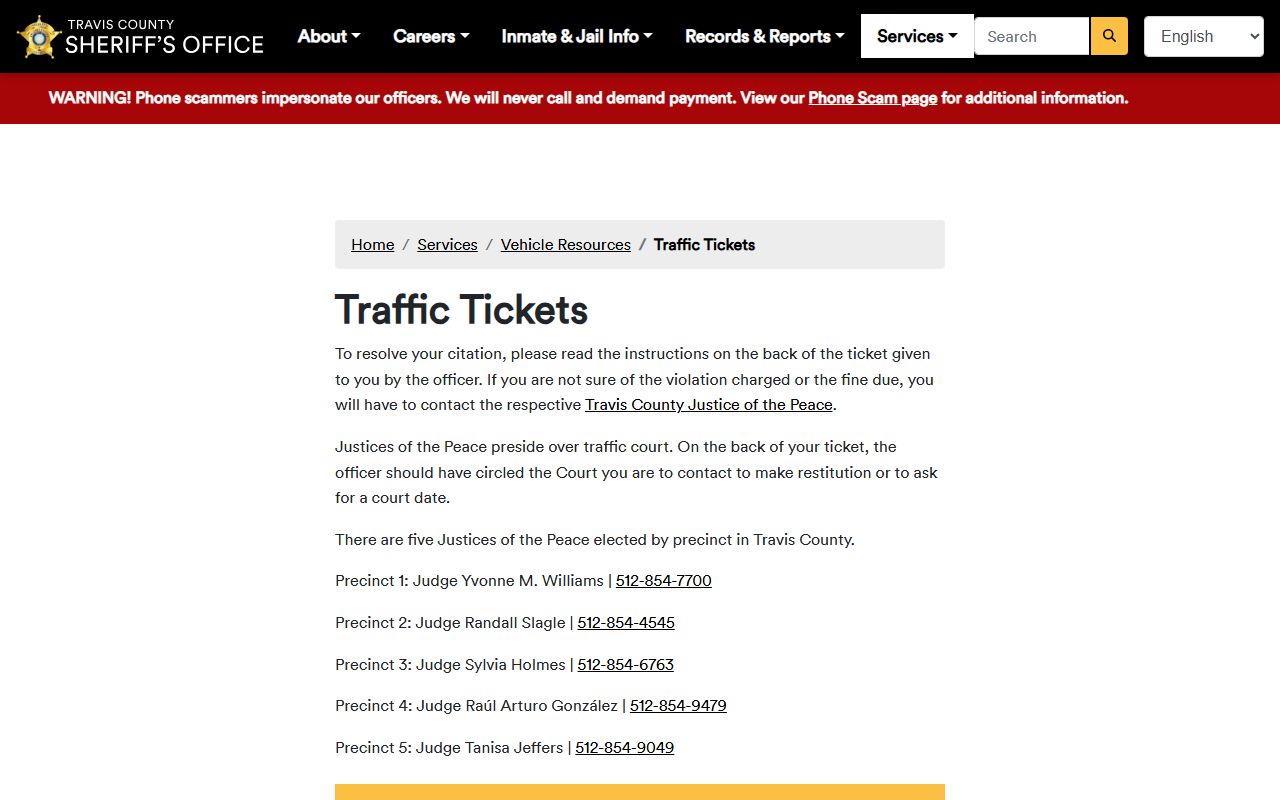
That page is the simplest map of who handles a county traffic ticket. If the ticket came from a city officer, it may belong to a municipal court instead, so read the citation carefully before you search.
Which Courts Handle Traffic Cases in Travis County
Two court systems split traffic work in Travis County. The Justice of the Peace courts handle county traffic cases across five precincts, along with small claims, evictions, and other fine-only criminal matters. The separate Austin Municipal Court and other city courts handle tickets written under city ordinance by city police. A district or county court at law generally does not hear a routine traffic ticket, so a traffic record is rarely a District Clerk record. The Justice of the Peace page explains JP jurisdiction and links the judicial records.
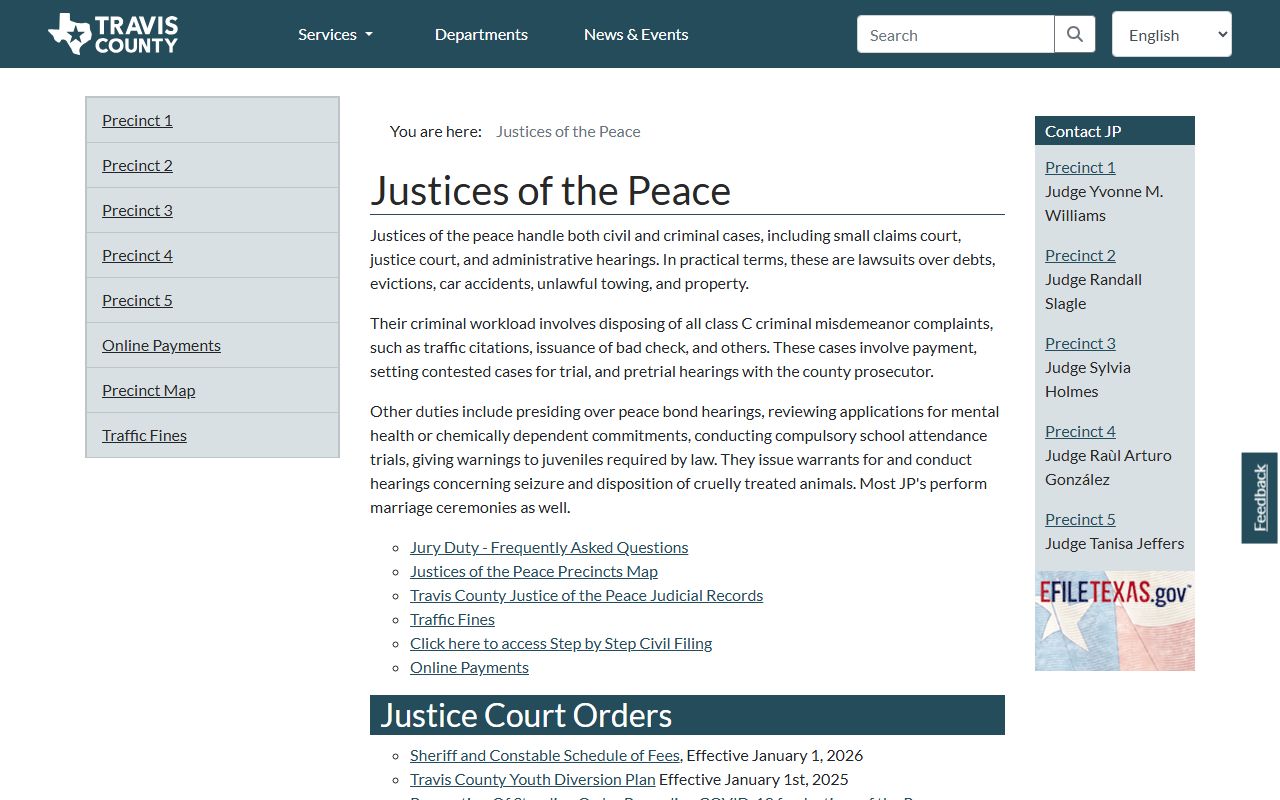
The five JP precincts each have their own judge and phone. Precinct 1 is Judge Yvonne Williams at 512-854-7700, Precinct 2 is Judge Randall Slagle at 512-854-4545, Precinct 3 is Judge Sylvia Holmes at 512-854-6763, Precinct 4 is Judge Raul Arturo Gonzalez at 512-854-9479, and Precinct 5 is Judge Tanisa Jeffers at 512-854-9049. The back of the ticket points to the right precinct.
Types of Traffic Cases on Record
Traffic records cover more than speeding. Most are fine-only Class C misdemeanors, but the category is broad. Common cases include moving violations, equipment and registration offenses, no insurance, and red-light or stop-sign violations. More serious matters, such as driving with a suspended license or repeat offenses, can carry heavier consequences. A few traffic-related charges, such as DWI, are not fine-only and move to the criminal courts entirely.
- Speeding and other moving violations.
- Equipment, registration, and inspection offenses.
- Driving without insurance or without a valid license.
- Red-light and stop-sign violations.
- Failure to appear or failure to pay add-ons.
What Travis County Traffic Court Records Show
A traffic court record tracks a citation from issuance to resolution. It identifies the driver, the offense, the issuing agency, and the financial and procedural status of the case. The fields below are the ones a traffic record typically includes.
| Field | What It Shows |
|---|---|
| Citation Number | The unique ticket number used to look up the case |
| Defendant | The cited driver's name |
| Offense / Statute | The violation charged and its code section |
| Officer / Agency | The citing officer and law-enforcement agency |
| Plea and Disposition | The plea entered and the outcome |
| Fine and Court Costs | Amounts due and payment status |
| Court Date | The setting, subject to change |
| Warrant / FTA Status | Whether a failure-to-appear or capias is active |
A deferred disposition or defensive-driving status may also appear, which affects whether the case lands on the driver record.
Searching by Citation Number vs by Name
You can usually search a traffic case two ways, and the citation number is the better one. The citation number opens a single case with no guessing, which is why the court asks for it first. A name search works when you do not have the ticket, but a common name can return several results, and you may need a date of birth or address to narrow it. The court's lookup tool accepts the fields below.
| Field Label | Type | Required | Notes |
|---|---|---|---|
| Citation Number | Text | Best option | Opens one case directly |
| Last Name | Text | Name search | Used when the ticket is lost |
| First Name | Text | No | Narrows a common last name |
| Date of Birth | Date | No | Helps tell drivers apart |
If you cannot find a case online, call the precinct or municipal court named on the ticket. JP judicial records are also linked from the county Justice of the Peace page.
Paying or Contesting a Travis County Traffic Ticket
A ticket gives you choices, and the deadline on the citation matters. You can pay the fine, which is an admission, or you can contest the ticket and ask for a hearing or trial. You may also qualify for a driver safety course or deferred disposition that keeps the violation off your record. Missing the deadline is the worst option, because it can trigger a failure-to-appear and a hold on your license. The steps below outline the choice.
- Read the citation for the court, the deadline, and the contact listed on the back.
- Decide whether to pay, request defensive driving or deferred disposition, or contest the ticket.
- To contest, enter a not-guilty plea with the court and request a hearing or trial date.
- To resolve without a conviction, ask the court about a driver safety course or deferred disposition.
- If you cannot pay in full, ask the court about a payment plan or an ability-to-pay option.
- Confirm the result with the court so any failure-to-appear status is cleared.
If a ticket went unpaid and a failure-to-appear or failure-to-pay status attached, the DPS program page explains the license consequences. The DPS failure to appear and failure to pay page covers how those holds work.
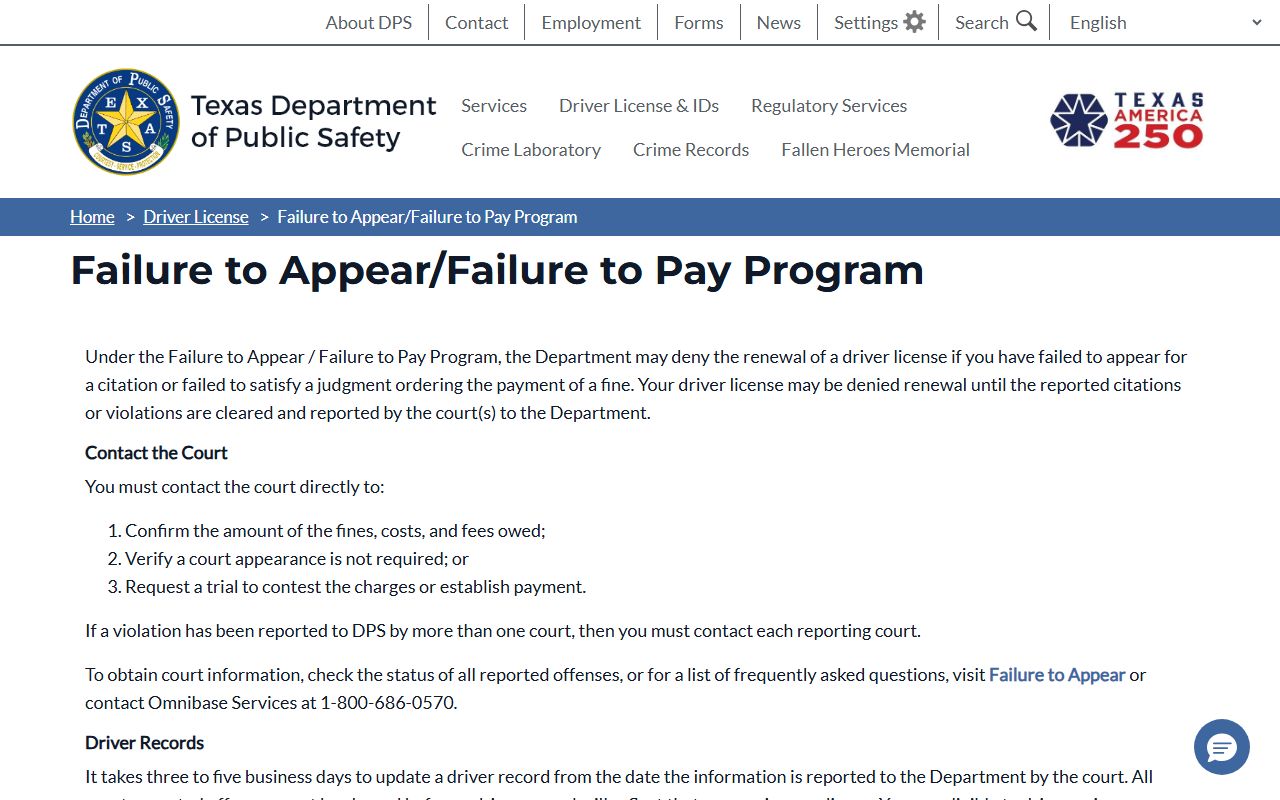
Clearing the underlying ticket with the court is what lifts that hold, so deal with the court first.
Public Access Laws for Traffic Court Records
Traffic court records are court records, so they are reached through the court that holds them rather than a generic open-records request. At the same time, motor-vehicle and driver's-license information carries special protection. Texas Government Code Section 552.130 protects driver's-license and motor-vehicle record information from broad public release, which is why a driver record is handled differently from a court case file.
So the case docket may be public through the court, while the driver's personal license data is shielded. For the broader public-records framework and the open-records process, see the Travis County public records page.
Court Traffic Records vs State Driver Records
This is the distinction that confuses most drivers. A court traffic record is the case file for a specific ticket, held by the JP or municipal court. A state driver record is your overall driving history, kept by the Texas Department of Public Safety, which includes license status, points, and convictions reported from courts. They are two different files held by two different agencies. The DPS driver license online services page is where you reach the state driver record side.
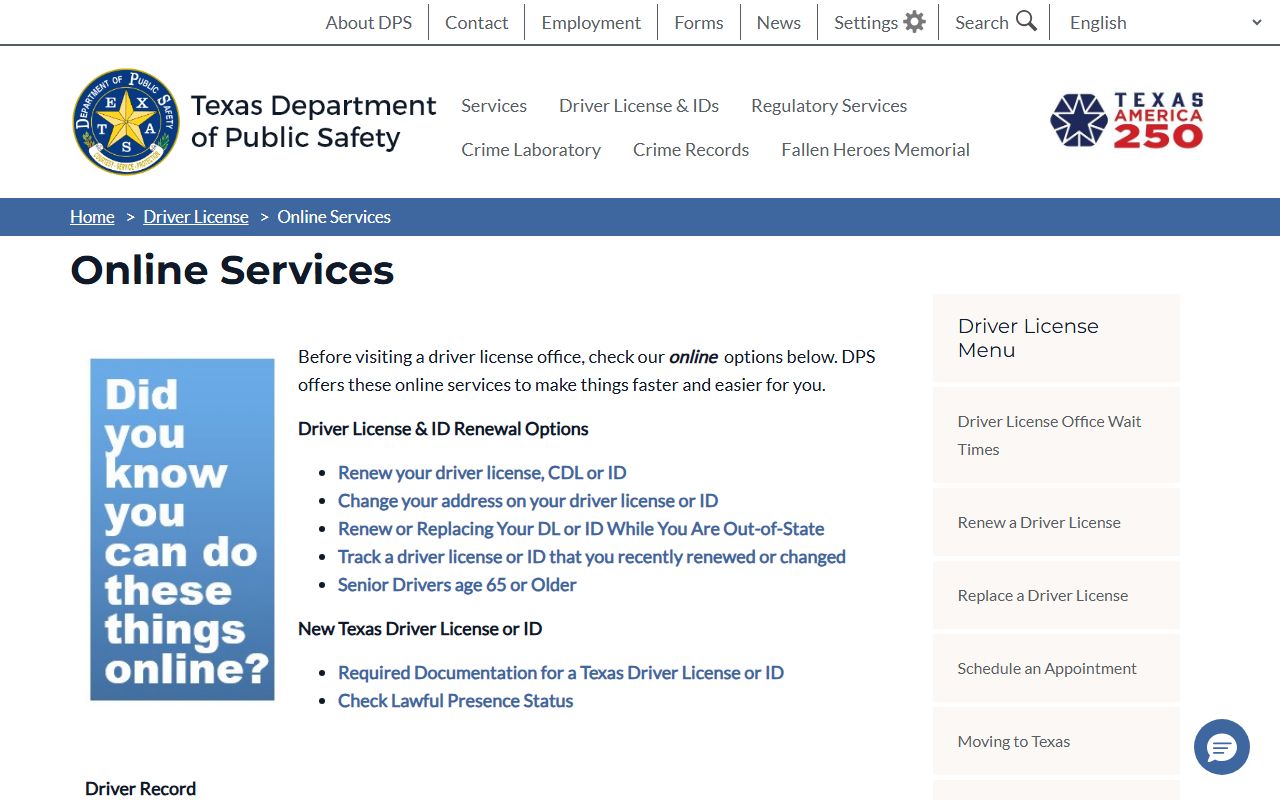
The table below compares the two records so you ask the right agency.
| Point | Court Traffic Record | State Driver Record |
|---|---|---|
| What it is | The case file for one ticket | Your overall driving history |
| Held by | JP or municipal court | Texas DPS |
| Where to access | The court that issued the ticket | DPS driver license online services |
| How to correct an error | Through the court of record | Through DPS |
Resolving a ticket in court is what eventually updates the conviction information that flows to the state driver record.
CDL and Commercial Driver Records
Commercial drivers face stricter rules, and a traffic ticket carries more weight for a CDL holder. Federal and state rules generally bar a CDL holder from using deferred disposition to hide a violation, so a conviction is more likely to reach the driving record. That can affect a commercial license and a driver's job. A CDL holder should think carefully before simply paying a ticket, which counts as a conviction.
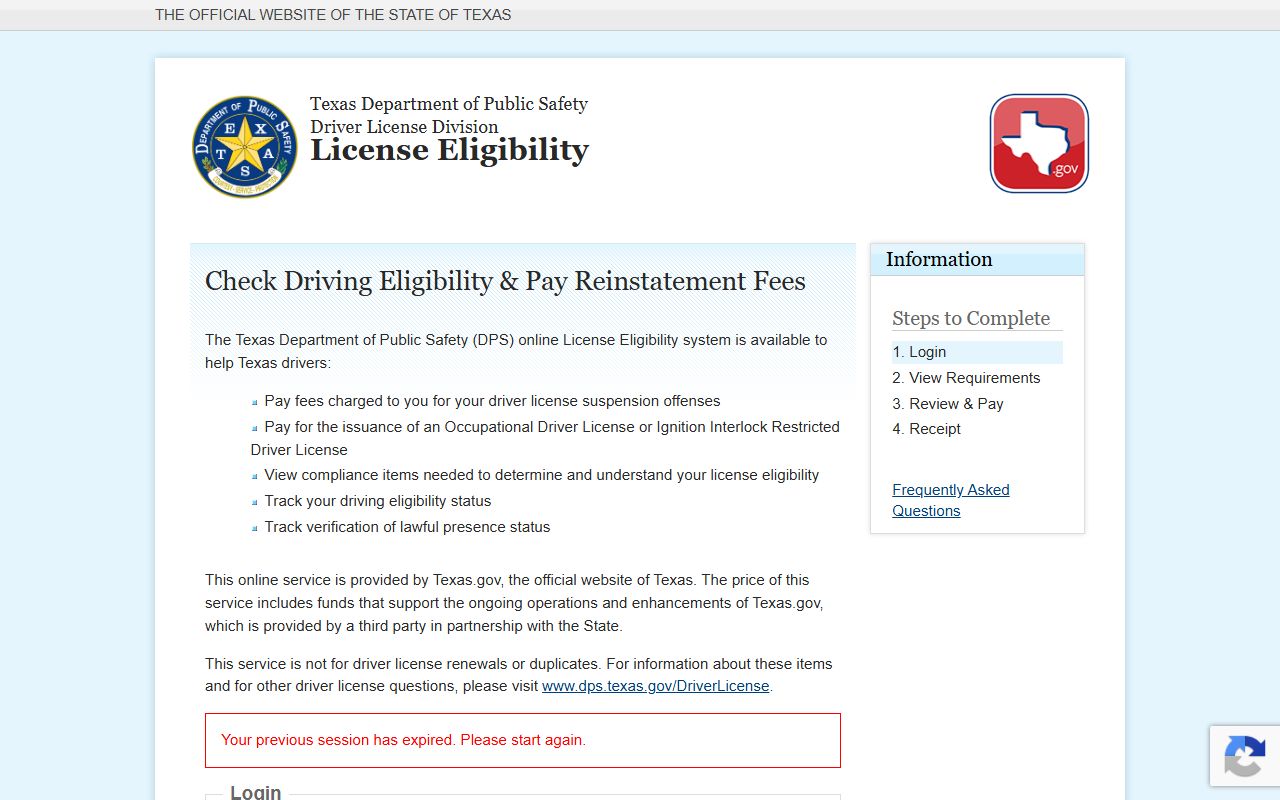
To check license eligibility and any reinstatement requirements, Texas offers an official online tool. The Texas driver license eligibility system shows status and reinstatement fees.
A commercial driver with a ticket should consider talking to an attorney before choosing how to resolve it.
DUI and DWI Cases
Driving while intoxicated is not a routine traffic ticket. A DWI is a criminal charge that moves to the county courts at law for a misdemeanor or the district courts for a felony, not the JP traffic docket. That means a DWI record is a County Clerk or District Clerk record, and it can carry jail, probation, and license consequences far beyond a fine.
Because a DWI is criminal, it follows the criminal-records path, not the traffic path. For how DWI and other criminal charges are recorded and searched, see the Travis County arrest records page.
Deferred Adjudication and Defensive Driving
Two common options can keep a traffic ticket off your driving record. A driver safety course, often called defensive driving, may be available for an eligible ticket, and completing it can lead to dismissal. Deferred disposition is a short probation on the ticket, where the case is dismissed if you stay out of trouble for the set period. Both require the court's approval and usually a request before the deadline on the citation.
These options matter because a simple payment is a conviction that can reach your driver record and raise insurance costs. Eligibility depends on the offense, your record, and whether you hold a CDL. Ask the court that issued the ticket which option applies, since the JP or municipal court decides.
Sealing or Expunging Traffic Records
Some traffic matters can be cleared from a public record, depending on the outcome. A dismissed or acquitted fine-only case may qualify for expunction under Texas law, which removes the record. A deferred disposition that ends in dismissal may also limit what shows publicly. The rules are specific, and a conviction generally cannot be expunged.
Because eligibility turns on the disposition and the offense, this is an area where the Travis County Law Library, Texas Law Help, or an attorney can help. For how expunction and nondisclosure work for criminal matters more broadly, see the arrest records page.
Fees for Traffic Record Copies
Fines and court costs vary by offense and court, so the citation or the court is the source for the exact amount due. Copy fees for a traffic court record follow the issuing court's schedule, and a certified copy costs more than a plain printout. The general copy charges seen across Travis County records are below as a guide.
| Item | Amount |
|---|---|
| Plain copy per page | $1 |
| Certified copy | $5 per document |
| Records search per name or case | $5 |
| Driver record (state) | Set by Texas DPS |
The fine and court costs on the ticket itself are separate from copy fees and are set by the court and state law. Confirm the amount with the court named on the citation.